

Rendered at 10:31:56 12/02/25
Sign up and get $15.00 bCredits free to use at checkout and another $5.00 bCredits when you make your first purchase. More info
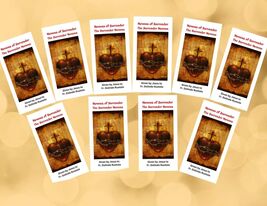
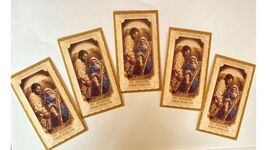
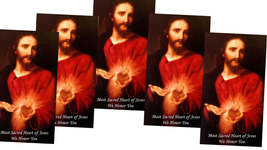
Detailed Examination of Conscience - Prayer Card (c)
$3.50 - $160.00
Sign up and get $15.00 bCredits free to use at checkout and another $5.00 bCredits when you make your first purchase. More info
Share & earn! Sign in, share this or any listing, and you’ll get commission when it sells.
Learn more


Shipping options
Estimated to arrive by Mon, Dec 15th.
Details
$4.95 via USPS Ground Advantage (1 to 10 business days) to United States
Offer policy
OBO - Seller accepts offers on this item.
Details
Return policy
Full refund available within 30 days
Purchase protection
Payment options
PayPal accepted
PayPal Credit accepted
Venmo accepted
PayPal, MasterCard, Visa, Discover, and American Express accepted
Maestro accepted
Amazon Pay accepted
Nuvei accepted
Shipping options
Estimated to arrive by Mon, Dec 15th.
Details
$4.95 via USPS Ground Advantage (1 to 10 business days) to United States
Offer policy
OBO - Seller accepts offers on this item.
Details
Return policy
Full refund available within 30 days
Purchase protection
Payment options
PayPal accepted
PayPal Credit accepted
Venmo accepted
PayPal, MasterCard, Visa, Discover, and American Express accepted
Maestro accepted
Amazon Pay accepted
Nuvei accepted
Item traits
| Category: | |
|---|---|
| Quantity Available: |
39974 in stock |
| Condition: |
Unspecified by seller, may be new. |
| grams: |
0 |
| weight: |
0.0 |
| Weight Unit: |
lb |
| Pack ofs: |
Listing details
| Seller policies: | |
|---|---|
| Shipping discount: |
Free shipping on orders over $100.00 |
| Price discount: |
10% off w/ $50.00 spent |
| Posted for sale: |
November 29 |
| Item number: |
1781136884 |
Item description
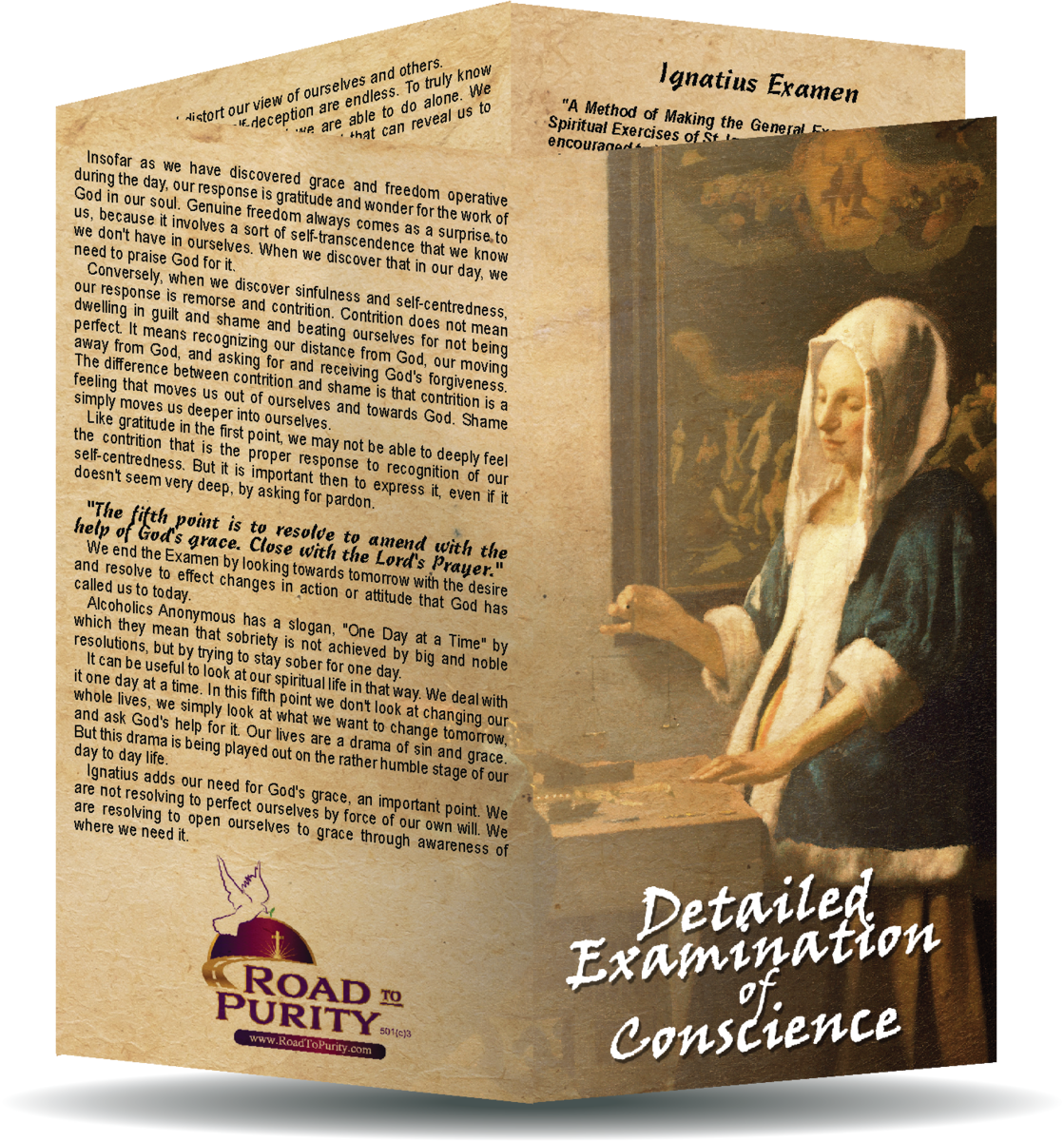
Detailed Examination of Conscience
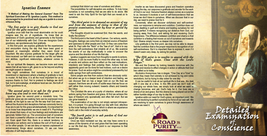
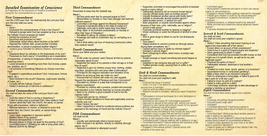
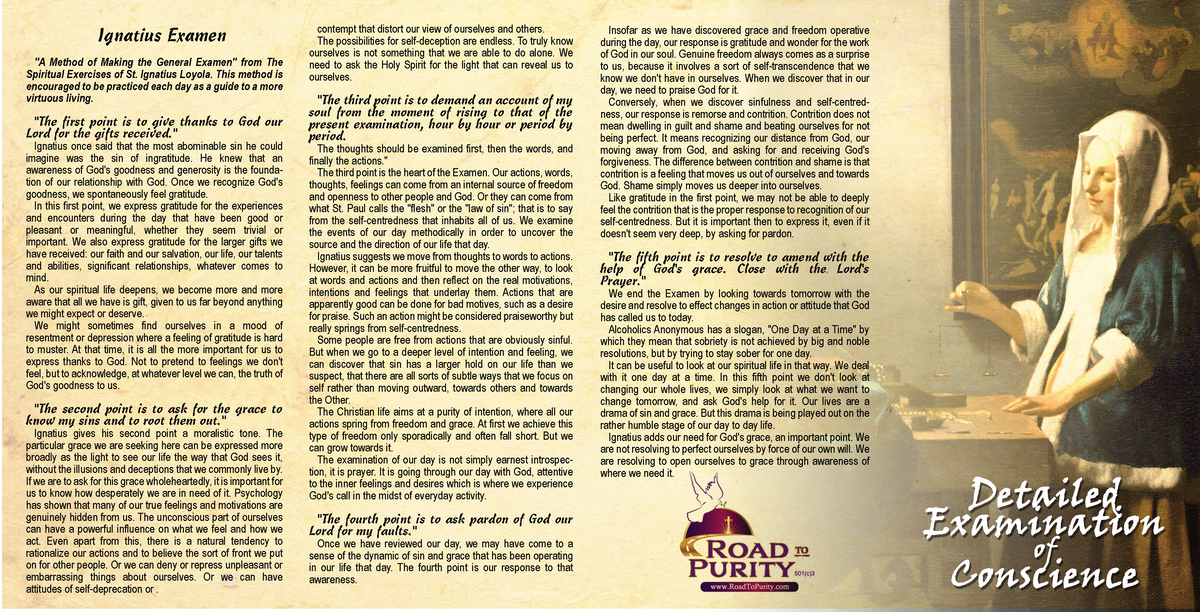
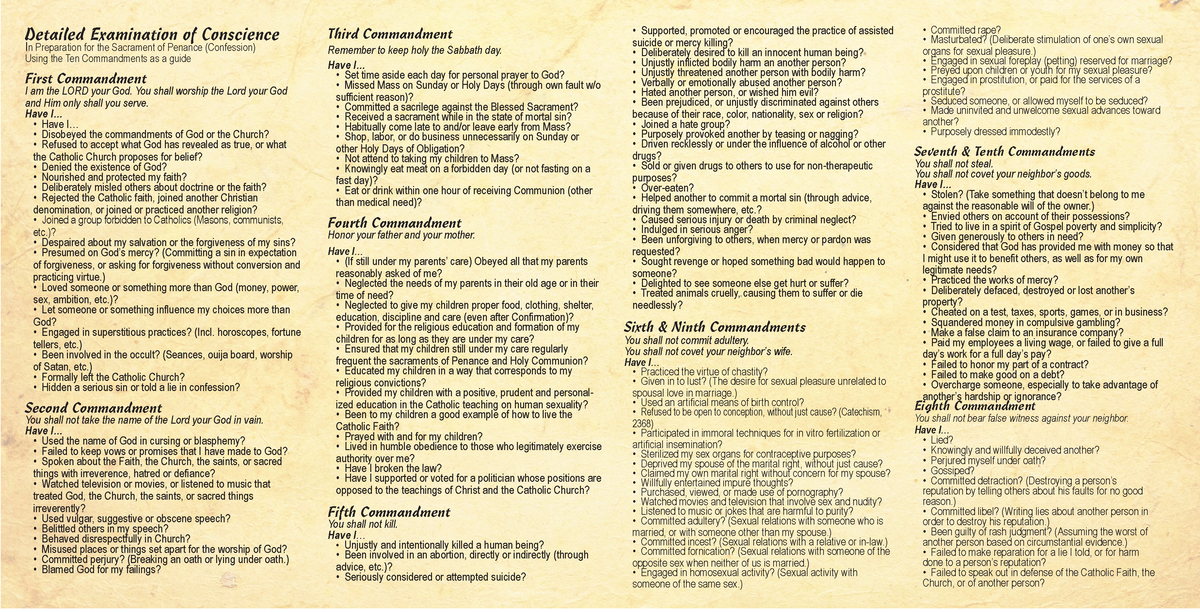
This 4-panel prayer card includes a Detailed Examination of Conscience, ideal for preparation for the Sacrament of Penance (Confession). Content is based on the Ten Commandments and contains great detail.
Also included is the Ignatius Examen which is ?A Method of Making the General Examen" from The Spiritual Exercises of St. Ignatius Loyola. This method is encouraged to be practiced each day as a guide to a more virtuous living.
Printed on heavy card stock with a laminate finish. The 12? x 6? card folds to a 3? x 6? size.
Contents of the Detailed Examination of Conscience
In Preparation for the Sacrament of Penance (Confession)
Using the Ten Commandments as a guide
First Commandment
I am the LORD your God. You shall worship the Lord your God
and Him only shall you serve.
Have I?
? Have I?
? Disobeyed the commandments of God or the Church?
? Refused to accept what God has revealed as true, or what
the Catholic Church proposes for belief?
? Denied the existence of God?
? Nourished and protected my faith?
? Deliberately misled others about doctrine or the faith?
? Rejected the Catholic faith, joined another Christian
denomination, or joined or practiced another religion?
? Joined a group forbidden to Catholics (Masons, communists,
etc.)?
? Despaired about my salvation or the forgiveness of my sins?
? Presumed on God?s mercy? (Committing a sin in expectation
of forgiveness, or asking for forgiveness without conversion and
practicing virtue.)
? Loved someone or something more than God (money, power,
sex, ambition, etc.)?
? Let someone or something influence my choices more than
God?
? Engaged in superstitious practices? (Incl. horoscopes, fortune
tellers, etc.)
? Been involved in the occult? (Seances, ouija board, worship
of Satan, etc.)
? Formally left the Catholic Church?
? Hidden a serious sin or told a lie in confession?
Second Commandment
You shall not take the name of the Lord your God in vain.
Have I?
? Used the name of God in cursing or blasphemy?
? Failed to keep vows or promises that I have made to God?
? Spoken about the Faith, the Church, the saints, or sacred
things with irreverence, hatred or defiance?
? Watched television or movies, or listened to music that
treated God, the Church, the saints, or sacred things
irreverently?
? Used vulgar, suggestive or obscene speech?
? Belittled others in my speech?
? Behaved disrespectfully in Church?
? Misused places or things set apart for the worship of God?
? Committed perjury? (Breaking an oath or lying under oath.)
? Blamed God for my failings?
Third Commandment
Remember to keep holy the Sabbath day.
Have I?
? Set time aside each day for personal prayer to God?
? Missed Mass on Sunday or Holy Days (through own fault w/o
sufficient reason)?
? Committed a sacrilege against the Blessed Sacrament?
? Received a sacrament while in the state of mortal sin?
? Habitually come late to and/or leave early from Mass?
? Shop, labor, or do business unnecessarily on Sunday or
other Holy Days of Obligation?
? Not attend to taking my children to Mass?
? Knowingly eat meat on a forbidden day (or not fasting on a
fast day)?
? Eat or drink within one hour of receiving Communion (other
than medical need)?
Fourth Commandment
Honor your father and your mother.
Have I?
? (If still under my parents? care) Obeyed all that my parents
reasonably asked of me?
? Neglected the needs of my parents in their old age or in their
time of need?
? Neglected to give my children proper food, clothing, shelter,
education, discipline and care (even after Confirmation)?
? Provided for the religious education and formation of my
children for as long as they are under my care?
? Ensured that my children still under my care regularly
frequent the sacraments of Penance and Holy Communion?
? Educated my children in a way that corresponds to my
religious convictions?
? Provided my children with a positive, prudent and personalized
education in the Catholic teaching on human sexuality?
? Been to my children a good example of how to live the
Catholic Faith?
? Prayed with and for my children?
? Lived in humble obedience to those who legitimately exercise
authority over me?
? Have I broken the law?
? Have I supported or voted for a politician whose positions are
opposed to the teachings of Christ and the Catholic Church?
Fifth Commandment
You shall not kill.
Have I?
? Unjustly and intentionally killed a human being?
? Been involved in an abortion, directly or indirectly (through
advice, etc.)?
? Seriously considered or attempted suicide?
? Supported, promoted or encouraged the practice of assisted
suicide or mercy killing?
? Deliberately desired to kill an innocent human being?
? Unjustly inflicted bodily harm an another person?
? Unjustly threatened another person with bodily harm?
? Verbally or emotionally abused another person?
? Hated another person, or wished him evil?
? Been prejudiced, or unjustly discriminated against others
because of their race, color, nationality, sex or religion?
? Joined a hate group?
? Purposely provoked another by teasing or nagging?
? Driven recklessly or under the influence of alcohol or other
drugs?
? Sold or given drugs to others to use for non-therapeutic
purposes?
? Over-eaten?
? Helped another to commit a mortal sin (through advice,
driving them somewhere, etc.?
? Caused serious injury or death by criminal neglect?
? Indulged in serious anger?
? Been unforgiving to others, when mercy or pardon was
requested?
? Sought revenge or hoped something bad would happen to
someone?
? Delighted to see someone else get hurt or suffer?
? Treated animals cruelly, causing them to suffer or die
needlessly?
Sixth Ninth Commandments
You shall not commit adultery.
You shall not covet your neighbor?s wife.
Have I?
? Practiced the virtue of chastity?
? Given in to lust? (The desire for sexual pleasure unrelated to
spousal love in marriage.)
? Used an artificial means of birth control?
? Refused to be open to conception, without just cause? (Catechism,
2368)
? Participated in immoral techniques for in vitro fertilization or
artificial insemination?
? Sterilized my sex organs for contraceptive purposes?
? Deprived my spouse of the marital right, without just cause?
? Claimed my own marital right without concern for my spouse?
? Willfully entertained impure thoughts?
? Purchased, viewed, or made use of pornography?
? Watched movies and television that involve sex and nudity?
? Listened to music or jokes that are harmful to purity?
? Committed adultery? (Sexual relations with someone who is
married, or with someone other than my spouse.)
? Committed incest? (Sexual relations with a relative or in-law.)
? Committed fornication? (Sexual relations with someone of the
opposite sex when neither of us is married.)
? Engaged in homosexual activity? (Sexual activity with
someone of the same sex.)
? Committed rape?
? Masturbated? (Deliberate stimulation of one?s own sexual
organs for sexual pleasure.)
? Engaged in sexual foreplay (petting) reserved for marriage?
? Preyed upon children or youth for my sexual pleasure?
? Engaged in prostitution, or paid for the services of a
prostitute?
? Seduced someone, or allowed myself to be seduced?
? Made uninvited and unwelcome sexual advances toward
another?
? Purposely dressed immodestly?
Seventh Tenth Commandments
You shall not steal.
You shall not covet your neighbor?s goods.
Have I?
? Stolen? (Take something that doesn?t belong to me
against the reasonable will of the owner.)
? Envied others on account of their possessions?
? Tried to live in a spirit of Gospel poverty and simplicity?
? Given generously to others in need?
? Considered that God has provided me with money so that
I might use it to benefit others, as well as for my own
legitimate needs?
? Practiced the works of mercy?
? Deliberately defaced, destroyed or lost another?s
property?
? Cheated on a test, taxes, sports, games, or in business?
? Squandered money in compulsive gambling?
? Make a false claim to an insurance company?
? Paid my employees a living wage, or failed to give a full
day?s work for a full day?s pay?
? Failed to honor my part of a contract?
? Failed to make good on a debt?
? Overcharge someone, especially to take advantage of
another?s hardship or ignorance?
Eighth Commandment
You shall not bear false witness against your neighbor.
Have I?
? Lied?
? Knowingly and willfully deceived another?
? Perjured myself under oath?
? Gossiped?
? Committed detraction? (Destroying a person?s
reputation by telling others about his faults for no good
reason.)
? Committed libel? (Writing lies about another person in
order to destroy his reputation.)
? Been guilty of rash judgment? (Assuming the worst of
another person based on circumstantial evidence.)
? Failed to make reparation for a lie I told, or for harm
done to a person?s reputation?
? Failed to speak out in defense of the Catholic Faith, the
Church, or of another person?
Ignatius Examen
"A Method of Making the General Examen" from The
Spiritual Exercises of St. Ignatius Loyola. This method is
encouraged to be practiced each day as a guide to a more
virtuous living.
"The first point is to give thanks to God our Lord for the gifts received."
Ignatius once said that the most abominable sin he could
imagine was the sin of ingratitude. He knew that an
awareness of God's goodness and generosity is the foundation
of our relationship with God. Once we recognize God's
goodness, we spontaneously feel gratitude.
In this first point, we express gratitude for the experiences
and encounters during the day that have been good or
pleasant or meaningful, whether they seem trivial or
important. We also express gratitude for the larger gifts we
have received: our faith and our salvation, our life, our talents
and abilities, significant relationships, whatever comes to
mind.
As our spiritual life deepens, we become more and more
aware that all we have is gift, given to us far beyond anything
we might expect or deserve.
We might sometimes find ourselves in a mood of
resentment or depression where a feeling of gratitude is hard
to muster. At that time, it is all the more important for us to
express thanks to God. Not to pretend to feelings we don't
feel, but to acknowledge, at whatever level we can, the truth of
God's goodness to us.
"The second point is to ask for the grace to know my sins and to root them out."
Ignatius gives his second point a moralistic tone. The
particular grace we are seeking here can be expressed more
broadly as the light to see our life the way that God sees it,
without the illusions and deceptions that we commonly live by.
If we are to ask for this grace wholeheartedly, it is important for
us to know how desperately we are in need of it. Psychology
has shown that many of our true feelings and motivations are
genuinely hidden from us. The unconscious part of ourselves
can have a powerful influence on what we feel and how we
act. Even apart from this, there is a natural tendency to
rationalize our actions and to believe the sort of front we put
on for other people. Or we can deny or repress unpleasant or
embarrassing things about ourselves. Or we can have
attitudes of self-deprecation or contempt that distort our view of ourselves and others.
The possibilities for self-deception are endless. To truly know
ourselves is not something that we are able to do alone. We
need to ask the Holy Spirit for the light that can reveal us to
ourselves.
"The third point is to demand an account of my soul from the moment of rising to that of the present examination, hour by hour or period by period.
The thoughts should be examined first, then the words, and
finally the actions."
The third point is the heart of the Examen. Our actions, words,
thoughts, feelings can come from an internal source of freedom
and openness to other people and God. Or they can come from
what St. Paul calls the "flesh" or the "law of sin"; that is to say
from the self-centredness that inhabits all of us. We examine
the events of our day methodically in order to uncover the
source and the direction of our life that day.
Ignatius suggests we move from thoughts to words to actions.
However, it can be more fruitful to move the other way, to look
at words and actions and then reflect on the real motivations,
intentions and feelings that underlay them. Actions that are
apparently good can be done for bad motives, such as a desire
for praise. Such an action might be considered praiseworthy but
really springs from self-centredness.
Some people are free from actions that are obviously sinful.
But when we go to a deeper level of intention and feeling, we
can discover that sin has a larger hold on our life than we
suspect, that there are all sorts of subtle ways that we focus on
self rather than moving outward, towards others and towards
the Other.
The Christian life aims at a purity of intention, where all our
actions spring from freedom and grace. At first we achieve this
type of freedom only sporadically and often fall short. But we
can grow towards it.
The examination of our day is not simply earnest introspection,
it is prayer. It is going through our day with God, attentive
to the inner feelings and desires which is where we experience
God's call in the midst of everyday activity.
"The fourth point is to ask pardon of God our
Lord for my faults."
Once we have reviewed our day, we may have come to a
sense of the dynamic of sin and grace that has been operating
in our life that day. The fourth point is our response to that
awareness.
Insofar as we have discovered grace and freedom operative
during the day, our response is gratitude and wonder for the work
of God in our soul. Genuine freedom always comes as a surprise
to us, because it involves a sort of self-transcendence that we
know we don't have in ourselves. When we discover that in our
day, we need to praise God for it.
Conversely, when we discover sinfulness and self-centredness,
our response is remorse and contrition. Contrition does not
mean dwelling in guilt and shame and beating ourselves for not
being perfect. It means recognizing our distance from God, our
moving away from God, and asking for and receiving God's
forgiveness. The difference between contrition and shame is that
contrition is a feeling that moves us out of ourselves and towards
God. Shame simply moves us deeper into ourselves.
Like gratitude in the first point, we may not be able to deeply
feel the contrition that is the proper response to recognition of our
self-centredness. But it is important then to express it, even if it
doesn't seem very deep, by asking for pardon.
"The fifth point is to resolve to amend with the help of God's grace. Close with the Lord's Prayer."
We end the Examen by looking towards tomorrow with the
desire and resolve to effect changes in action or attitude that God
has called us to today.
Alcoholics Anonymous has a slogan, "One Day at a Time" by
which they mean that sobriety is not achieved by big and noble
resolutions, but by trying to stay sober for one day.
It can be useful to look at our spiritual life in that way. We deal
with it one day at a time. In this fifth point we don't look at
changing our whole lives, we simply look at what we want to
change tomorrow, and ask God's help for it. Our lives are a
drama of sin and grace. But this drama is being played out on the
rather humble stage of our day-to-day life.
Ignatius adds our need for God's grace, an important point. We
are not resolving to perfect ourselves by force of our own will. We
are resolving to open ourselves to grace through awareness of
where we need it.
More in store

Added to your wish list!
- Detailed Examination of Conscience - Prayer Card (c)
- 39974 in stock
- Available in multiple pack ofs
- Price negotiable
- Handling time 3 days. Estimated delivery: Mon, Dec 15th
- Returns/refunds accepted
Get an item reminder
We'll email you a link to your item now and follow up with a single reminder (if you'd like one). That's it! No spam, no hassle.
Already have an account?
Log in and add this item to your wish list.


